My daughter has DRPLA.
When she was a baby, she grew well at first. She could hold her head up at 2months, sit by 5 months, and started walking at 1 year old.
At her 1.5-year checkup, she could only stack 3 out of 5 blocks. The doctor told us to wait and see until she was 2.
At 2 years old, tests showed that her growth was slow.
She also had trouble speaking and moving smoothly.
From 3 years, she started therapy twice a month.
At 5 years, she started speech therapy.
At that time, she was diagnosed with developmental coordination disorder and communication disorder.
However, MRI, CT, and brain wave tests showed no problems.
She kept growing in her own way, little by little.
With support, she was able to do more things and say more words.
But when she was 6 years old, she had her first seizure.
A brain wave test was done, and she started taking medicine.
After that, she had seizures when her medicine was adjusted or when she was very tired.
We tried to control them with medicine, but her walking became unstable.
So, we did a genetic test. At 8 years, she was diagnosed with DRPLA.
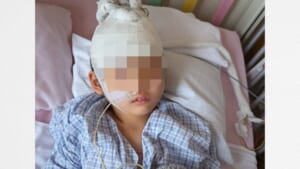
Now, she is 11 years old. Over the past year, her condition has gotten much worse.
She can no longer walk, sit, eat, or speak.
She is fed through a tube, and she cannot hold up her head.
Her body has become stiff, and she does not react or make eye contact anymore.
Her brain wave test showed that she is having nonconvulsive status epilepticus.
She has lost so much in such a short time.
I am always worried about choking and seizures.
Even when she seems okay, just five minutes later, she might be coughing and struggling.
No matter how hard I try to stay positive, I keep falling into darkness.
Even simple, precious moments between a parent and child have become so difficult.
She has lost everything—eating, walking, talking, laughing, crying.
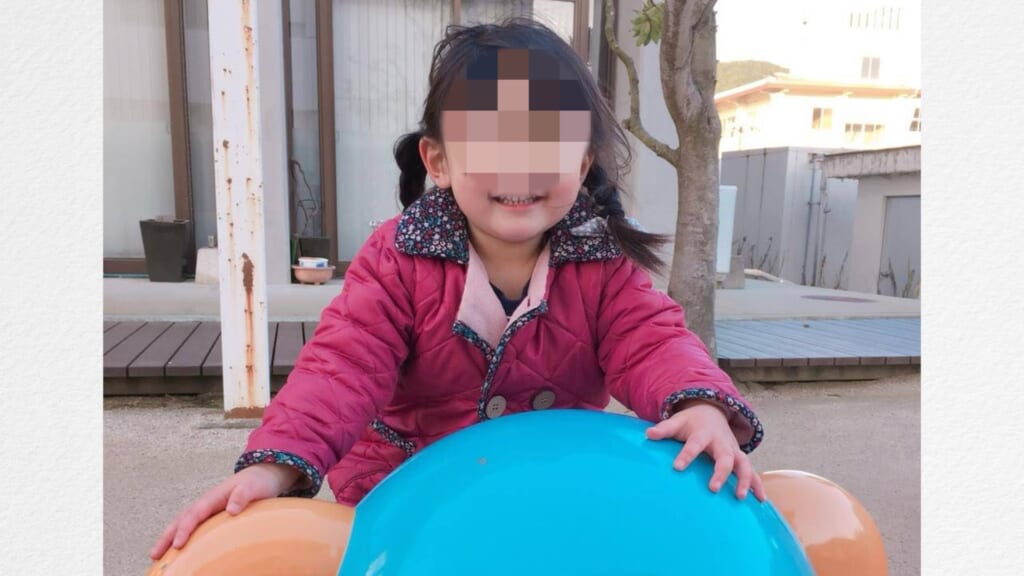
She used to love going for walks, playing in the park, seeing animals, playing with dolls, reading books, singing songs, eating snacks, drinking juice, and being held in my arms.
But DRPLA has taken everything away from her.
It happened so fast that my heart cannot keep up.
I carry my 24kg daughter every day, and my back hurts. I don’t get much sleep because of her daily medical care.
We also use short-stay services on a regular basis, but there are often many applicants, and sometimes we are suddenly turned down due to infection control measures.
There are also few places and slots available for short-stay services.
The hardest part is that my husband was also diagnosed with DRPLA.
His condition is slowly getting worse.
Since last summer, he has not been able to work, but he was not recognized as having a severe disability.
We are struggling, both emotionally and financially.
His memory and emotions are affected.
He sometimes runs outside barefoot or falls down the stairs. We have had to call an ambulance more than once.
We have nowhere to go for full support.
DRPLA is a truly painful disease.