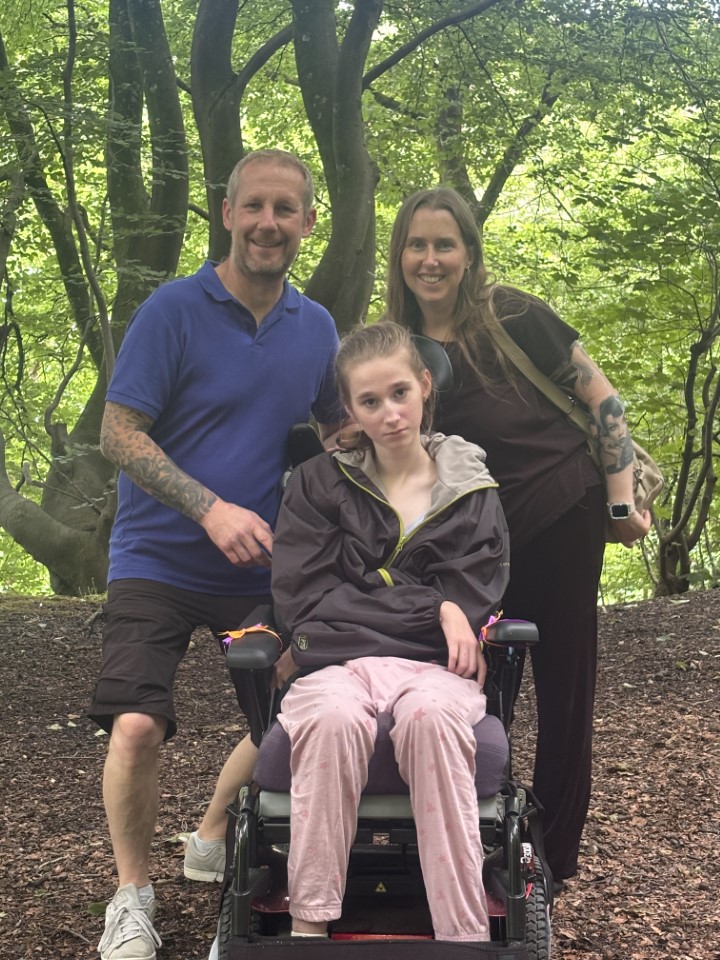
Hi We live in the UK.
Our daughter, Jessica is 20 years old and was diagnosed with DRPLA about 2 months ago.
She was born in 2005 and was normal until around 7 years old.
She met her milestones and was able to read a Welsh book.
At age 7 she started struggling at school and was diagnosed with a learning disability.
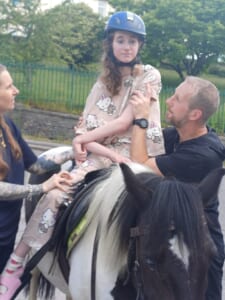
She went to gymnastics and horse riding and was able to walk and talk.
At age 10 she was diagnosed with epilepsy and her seizures were out of control even though she was on loads of medication.
At age 13 I noticed that she would start losing her balance and would fall down.
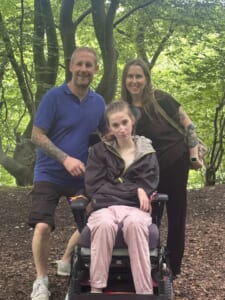
At 15 it got worse and she had to start using a wheelchair and she lost her speech.
She is now peg fed and is in nappies.
She can’t walk, talk, eat is in a wheelchair and peg fed.
Her legs shake violently and she stares at the wall.
She has deteriorated fast
Watching Jessica go from being able to do normal things to not doing anything at all has been so hard.
Her paediatrics doctors kept saying it was her epilepsy medication
but I knew there was something else.
Watching her fall over and not know why was so hard to watch
and when she stopped talking no one knew why.
I cried every day because I was watching my little girl go from being able to do horse riding and gymnastics to doing nothing at all and in a wheelchair with her legs shaking.
I felt angry and confused.
She is awake most nights and is in pain so me and my husband don’t sleep much.
Then she was put under an adult doctor who agreed there was something else happening and he referred her to generics
and then we were told 2 months ago she had DRPLA.
We were devastated,
we hadn’t heard of it before.
Me and my husband are heartbroken.
We see Jessica suffer everyday and when we ask for help no one knows what to do as DRPLA is so rare and there is not much research out there.
Me and my husband are being tested to see which one of us has it
and it’s a stressful time.
We also have to worry about our other children as we have been told there is a 50% chance they have it.
It’s such a cruel disease
and it’s been an extremely hard time for us.
Jessica was able to walk in high heel shoes and she always wanted to get married and wear a wedding dress
but she will never be able to wear one,
she will never be able to go out with friends and wear sparkly clothes,
this disease has robbed her of so much
and it’s unbearable to think of the fact
that we will lose her one day.
We are struggling to come to terms with this and as a family we are truly heartbroken