私の娘は27歳、DRPLAを患っています。My daughter is 27 years old and has DRPLA.
She was born by C-section because she was in a breech position. I was told the umbilical cord was wrapped around her body, and I was worried. But she grew and developed well, just a little earlier than average.
Then, around the age of 9, she started to fall behind in schoolwork. I wondered if she had a learning disability or some other developmental issue. But her teacher and people around her didn’t say anything was wrong. I didn’t know where to go for help, and I struggled alone at that time.
At age 12, she had her first seizure. When she was 13, she took an intelligence test and was diagnosed with an intellectual disability.
I felt relieved to finally understand the reason for her struggles with learning. But at the same time, I felt a mix of emotions—worry about her future, and if I could support her for her whole life.
Also, she started to have seizures a few times a year. Each time, the seizures would stop quickly, so I told myself, “It will be okay again this time.” But part of me was always scared—“What if it doesn’t stop this time? What if she dies?” The types and doses of her medicine kept increasing.
When she was just under 20, she began to lose balance.
We were told it was a side effect of the seizure medicine. But little by little, she lost more and more of her independence.
She couldn’t dress herself, she spilled food, and she started to wet herself. Even though she had been able to do daily tasks, she couldn’t anymore.
Her IQ also dropped. When she was 23, she was diagnosed with DRPLA.
After she became an adult, I had been learning about how to support her after I pass away.
But when I heard the name of the disease, I strangely felt a bit of relief—”Now I can care for her until the end. I don’t have to worry about what happens after I’m gone.”
But even though DRPLA is a genetic disease, no one else in our family has it.
So we still don’t know whether it came from me or my husband. One of us may get sick in the future, and that’s still a worry.
I cried when she had seizures. I cried when she was diagnosed with an intellectual disability.
And now, I know that everything was because of this disease called DRPLA—and it’s painful.
Four years after her diagnosis, she now needs help with everything in daily life.
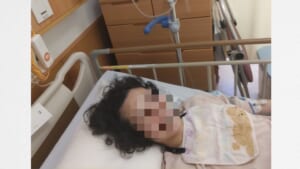
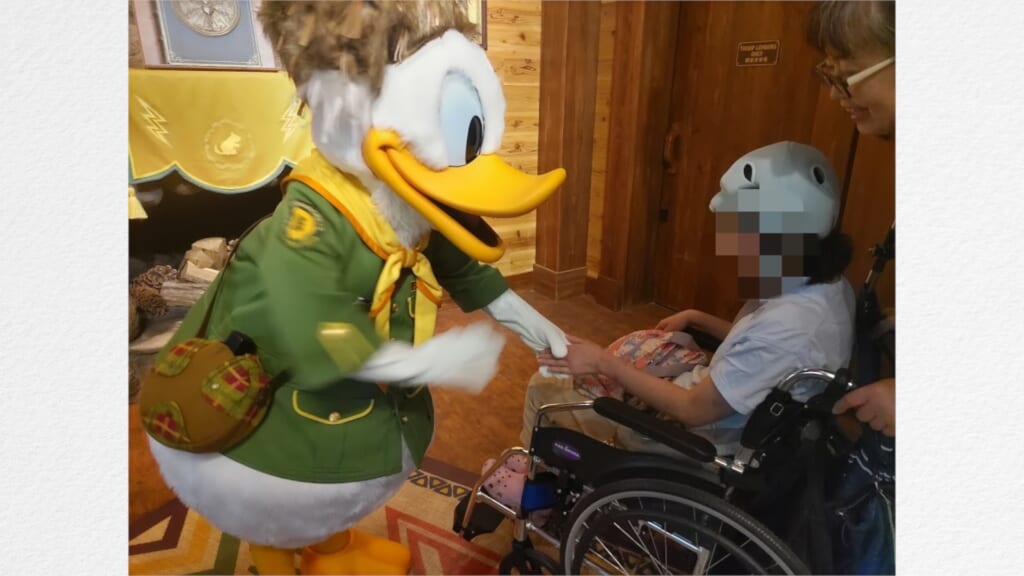
She cannot walk anymore and uses a wheelchair. She has had aspiration pneumonia twice, and it’s getting harder for her to eat by mouth.
She doesn’t speak much now, and her words are hard to understand. It’s difficult to communicate with her.
When I think about her teenage years, how we worked so hard so she could live on her own even with a disability—it breaks my heart to see that everything she had learned is now gone. It’s so sad. I don’t know what to do with this feeling.
I truly hope a treatment will come soon, and that this sadness can finally end.